| |
| Wednesday, 04 November 2026 |
| The Opera Singer Phenomenon – How Do They Make That Noise? |
| Tim Mirfin |
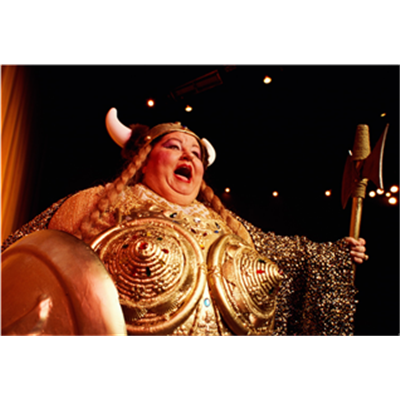 |
Tim is an opera singer. He has performed in all major European countries, Russia, US, Australia and the Middle East. He has given concerts in some of classical music’s most iconic venues, such as Amsterdam’s Concertgebouw, Vienna’s Musikverein, the Bolshoi, the Wigmore, Festival and Albert Halls. He also teaches singing, gives masterclasses, lectures on opera and the voice and runs a local community choir. He studied postgraduate at the Royal Academy of Music and National Opera Studio, previously reading law at Cambridge. He is passionate both about opera as an art form and also about the sheer act of singing. He is keen to share peaks behind the curtain on both apparently mysterious activities. That strange noise that opera singers make, is it really necessary? And if so, why do they make it? How do they make it? Is it something anyone can do or are they some race apart? The talk is liberally illustrated with picture, video, sound, both live and recorded, and a small (unstressful) amount of audience participation. This talk is designed to appeal to opera fan, opera sceptic and opera ignoramus in equal measure. |
|
| Wednesday, 02 December 2026 |
| A Photographic Odyssey – Shackleton’s Endurance Expedition Captured on Camera |
| Mark Cottle |
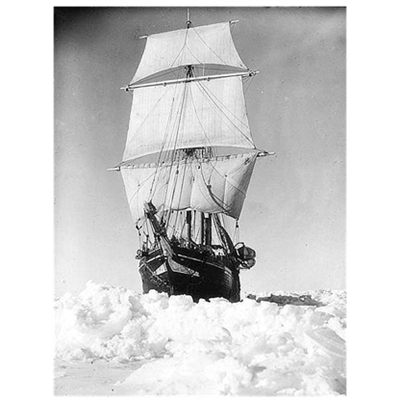 |
On Ernest Shackleton’s third Antarctic expedition in 1914, his ship, the Endurance, was trapped and eventually crushed in the pack ice. After camping for five months on the ice, Shackleton’s men rowed to the remote Elephant Island. From there, Shackleton sailed for help to South Georgia over 800 miles away. Over three months later he returned to rescue the crew of the Endurance. Frank Hurley, one of the great photographers of the 20th century, was the expedition’s official photographer. His photographs are a visual narrative of an epic journey which capture with great artistry new and amazing landscapes within which a remarkable human drama is played out. The aim of the lecture is to capture Hurley’s achievements as a photographer of the Antarctic in the first flush of human contact when it was still essentially terra incognita. Since obtaining an MA in Late Medieval Society and Culture, Mark has spent his career teaching and lecturing in Further and Higher Education. He has been an Arts Society lecturer since 2007. In addition to his interest in the Middle Ages, Mark is fascinated by two twentieth century personalities – Churchill and Shackleton. |
|
| Wednesday, 06 January 2027 |
| Double Dutch: Symbols, Emblems and ‘Double-Entendre’ in Dutch Genre Painting |
| Lynne Gibson |
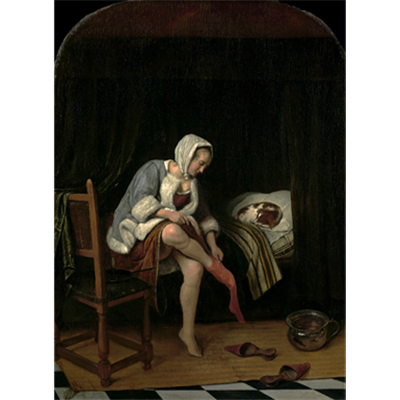 |
The merchants of seventeenth century Holland filled their town houses with paintings. A favourite subject was scenes of everyday life: depicting behaviour both good … and bad. But these upright Calvinist citizens rejected Catholic Baroque melodrama. They wanted nothing to alarm the in-laws or corrupt the children. Innocent objects hint at adult themes: plucked chickens and lap dogs, lutes and virginals, oysters and artichokes, foot warmers and bed warmers. This is a world of subtle hints and double-entendre, spoken through a language of symbols, emblems and motifs. Attend this lecture to explore the hidden meanings in everyday scenes and become a fluent reader of ‘Double Dutch’. Now working as a freelance lecturer in the History of Art, Lynne originally trained as a fine artist and has taught painting, drawing and printmaking in higher and adult education. She lectured as an art historian for the universities of Sussex and Bristol where she introduced 'Understanding Art' to the Lifelong Learning programme and residential summer schools. Gives talks, lectures and guided tours to a wide range of organisations and institutions. She has worked as a professional artist specialising in oil painting and etching. Solo and group shows have included the RWA, British Museum and the Barbican. |
|
| Wednesday, 03 February 2027 |
| Journey across the Himalayas
|
| Zara Fleming |
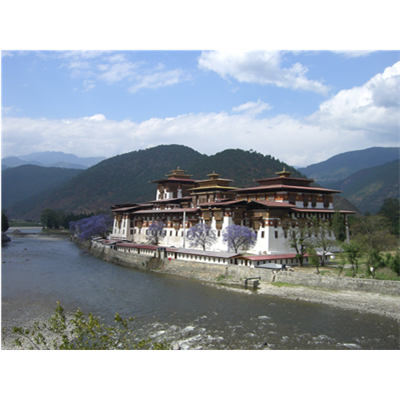 |
This lecture will focus on the Buddhist areas of the highest mountain range in the world, the Himalayas. The once spiritual domain of Tibetan culture and religion, spanning 2000 miles from Ladakh in the west to Bhutan in the east. It will explore the kingdoms and principalities of Ladakh, Zanskar, Spiti, Lahoul, Nepal, Mustang, Sikkim, Bhutan and their spiritual heartland of Tibet. Many of these countries lay on the ancient trade routes connecting India with Central Asia, and although isolated became important centres of Buddhist art and culture, housing vast repositories of sacred art in their remote monasteries and temples. Zara is a freelance lecturer, art consultant and exhibition curator specialising in the art and culture of Tibet, the Himalayan areas and Mongolia. Initially based at the V&A, but also worked with the Central Asian Department of Bonn University, the Orient Foundation, the Royal Academy, Tibet House, the National Museums and Galleries on Merseyside and Asia House. Edited Masterpieces of Mongolian Art: Vol 1 and has published many articles in the field of Buddhist art and culture. |
|
| Wednesday, 03 March 2027 |
| Charles Rennie Mackintosh
|
| Rosalind Whyte |
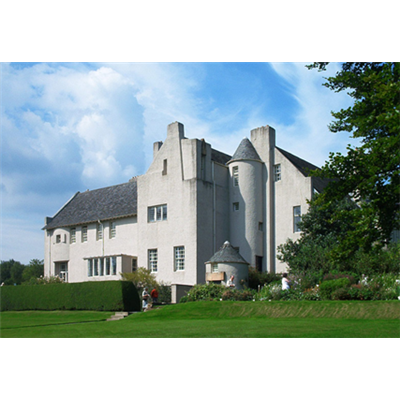 |
Scottish architect, designer and artist Charles Rennie Mackintosh is now a well-known name and a major draw for the tourist industry in Glasgow, with several of his buildings still existing, as well as his designs for Tea Rooms. However, his work was not always so well received and, following some early success, which included his architectural masterpiece, the Glasgow School of Art, his prospects floundered. In this lecture we track him from that early success in his native Glasgow, through the years of doubt and struggle, ultimately to the South of France where he enjoyed the last few years of his life travelling with his wife and collaborator Margaret and reinvented himself as a water colour painter. With a wonderful array of beautifully designed buildings, furniture and interiors to enjoy along the way, we explore the life and work of this much loved artist and architect. Rosalind studied at Goldsmiths and Birkbeck College. Experienced guide at Tate Britain, Tate Modern, the Royal Academy and Greenwich. Lectures at Tate, to independent art societies and on cruises. |
|
| Wednesday, 07 April 2027 |
| Clash of the Titans – Michelangelo and his Rivals
|
| Paula Nuttall |
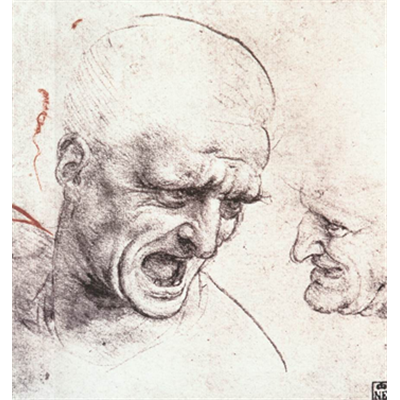 |
This lecture offers a fresh angle on the High Renaissance, from the viewpoint of the fierce and often bitter rivalries that existed between the artistic Titans of the day. Set against the backdrop of Florence and Rome, with Michelangelo as its protagonist and Leonardo and Raphael in supporting roles, it draws on contemporary anecdote to evoke personalities and tell the stories behind many of the most celebrated works of the Italian Renaissance, providing an entertaining yet illuminating glimpse into the creation of some of the most iconic paintings in western art. Specialist in Renaissance art, both Italian and northern European, Paula has published widely, notably From Flanders to Florence: the Impact of Netherlandish Painting 1400-1500 (Yale, 2004). Has collaborated on major exhibitions including Jan van Eyck: an Optical Revolution (Ghent, 2020). Before retiring in 2023 Paula was Director of the V&A Medieval and Renaissance Year Course, and has taught at – among others – the Courtauld Institute and the British Institute of Florence. She now focuses on the Arts Society, her own online courses, and research |
|
| Wednesday, 05 May 2027 |
| Thirty Years on from The Royal Academy’s ‘Sensation’ Exhibition
|
| Pamela Campbell-Johnson |
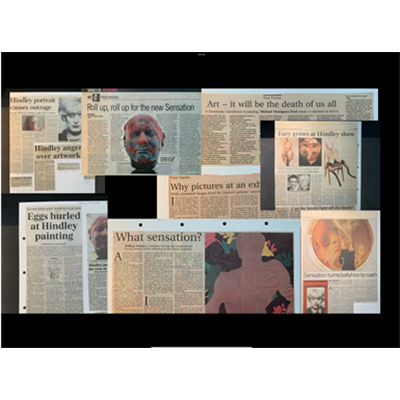 |
In 1997, the Royal Academy of Arts took the world by storm by curating an exhibition of contemporary art. The first of its kind. The Main Galleries of Burlington House were transformed for this landmark show, 'Sensation'. Apart from launching the careers of many Young British Artists (the 'YBAs'), the exhibition also gathered much controversy. Many of the works were owned by the advertising mogul, Charles Saatchi and this lecture will assess the impact of this exhibition, the artists and their works. How did 'Sensation' launch contemporary art in to the mainstream? What has it meant for the careers of certain YBAs? Pamela has over 30 years of lecturing experience to undergraduates, adult groups, and to Friends and Patrons of the Royal Academy of Arts as part of the RA’s Adult Education Department. She specialises in British Domestic Architecture and Modern British Art - with a particular love for the 1920s and 1930s. She had a permanent job at the Royal Academy for 12 years which included the ‘Sensation’ exhibition. |
|
| Wednesday, 02 June 2027 |
| American Impressionism
|
| Julian Halsby |
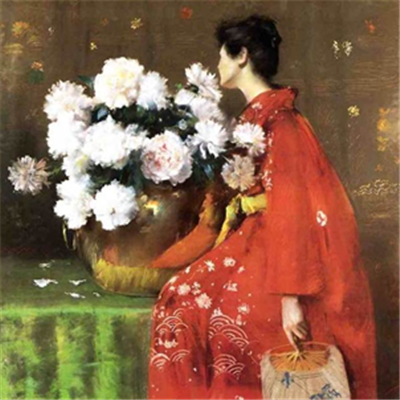 |
American Impressionism has been unjustly neglected by European art historians and critics for many years, yet some wonderful paintings full of life, colour and vigour, were produced in the United States in the late 19th and early 20th centuries. James McNeil Whistler is an important figure in this story being the first American to establish a reputation in Europe. He was an inspiration to the many American students who came to Paris after the Civil War to study at the Academie Julian and other ateliers. Julian studied History of Art at Cambridge. Formerly Senior Lecturer and Head of Department at Croydon College of Art. Publications include Venice - the Artist's Vision (1990, 1995), The Art of Diana Armfield RA (1995), Dictionary of Scottish Painters (1990, 1998, 2001, 4th edition 2010), A Hand to Obey the Demon's Eye (2000), Scottish Watercolours 1740-1940 (1986, 1991), A Private View - David Wolfers and the New Grafton Gallery (2002). Interviews artists for the Artist Magazine and is a member of The Critics Circle. A practising artist, he was elected to the Royal Society of British Artists in 1994 and was Keeper from 2010 to 2021 |
|